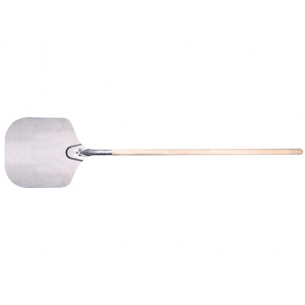
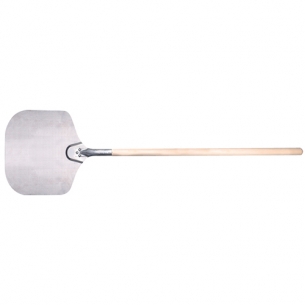
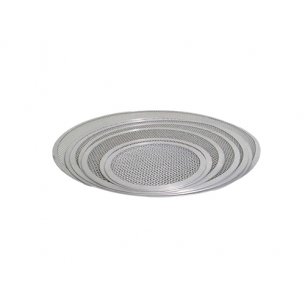
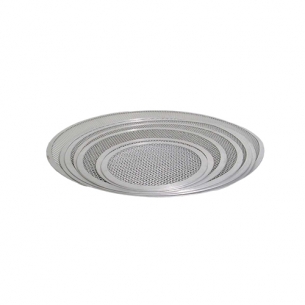
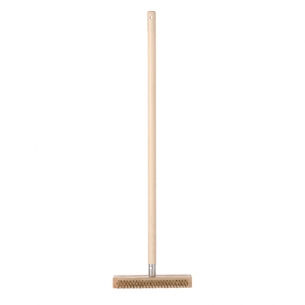
The pizza peel is the pizzaiolo's quintessential tool: it loads the raw pizza, turns it if needed, takes it out of the oven and transfers it to the serving plate. A movement repeated 80 to 150 times per service, demanding a tool perfectly suited to the pizza format worked. The Ø305 mm peel matches the most common format in Neapolitan and individual pizza: the 25 to 30 cm disc.
Why the Ø305 mm is the reference peel for individual pizzas
The choice of peel diameter is not random. A peel too large for the pizza creates an unstable overhang on loading and increases the risk of the pizza folding or sliding crooked. A peel too small does not support the pizza correctly on its way out of the oven. At 305 mm diameter, this peel exactly matches pizzas of 25 to 30 cm — the standard size of Neapolitan pizza (officially 28-30 cm under AVPN rules) and individual catering pizza.
The 1 kg weight is a key argument for high-cadence service. A heavy peel (2-3 kg) tires the wrist over time and makes the movement less precise, increasing loading errors — pizzas that fold, catch the deck, land crooked. At 1 kg, the Ø305 mm peel stays manageable from the first to the last service.
This peel suits all deck ovens where you load directly onto the stone or refractory deck: electric deck ovens (300-500°C), gas deck ovens (the 100 cm handle protects from side flames), wood ovens (the peel places the pizza at the oven periphery or turns it during baking), and Neapolitan pizzerias (the Ø305 mm peel is the standard tool of the Neapolitan tradition — the 28-30 cm pizza is loaded with the round peel under a 450°C flame for a 60-90 second bake).
Specifications
| Spatula diameter | 305 mm |
|---|
| Total length | ~100 cm |
|---|
| Weight | 1 kg |
|---|
| Material | Stainless steel |
|---|
| Compatibility | Electric, gas, wood deck ovens |
|---|
Ø305 mm vs Ø405 mm peel
| Criterion | Peel Ø305 mm | Peel Ø405 mm |
|---|
| Target pizza | 25-30 cm (individual, Neapolitan) | 35-40 cm (family, American, XXL) |
| Weight | 1 kg (light) | 3 kg (robust) |
| Cadence | High — precise, fatigue-free | Moderate — heavier pizza, wider movement |
What pizzaiolos ask
- How do I stop the pizza sticking to the peel on loading?
- The golden rule is to lightly flour the peel before placing the raw pizza. Durum wheat semolina (coarser than flour) is preferred by many pizzaiolos as it rolls better under the pizza and slides more easily. Loading must be done without delay once the pizza is on the peel — every second left flat increases the risk of sticking, especially if the topping is liquid (tomato sauce).
- Can the peel be used to turn the pizza during baking?
- Yes, it is even recommended for wood ovens where the heat is asymmetric. In a well-calibrated electric deck oven, turning is generally not necessary. In a gas oven with radiant heat, turning the pizza halfway evens out the top colouring.
- How many peels are needed in simultaneous service?
- The professional rule is to have at least 2 peels of the same diameter in service: one to load, one to take out. This avoids round trips and keeps the rhythm at peak time. For a pizzeria doing 100+ pizzas per service, 3 peels let you manage several cycles simultaneously.
Delivery — Pizza peel spatula Ø305 mm, ~100 cm, 1 kg, stainless steel. Delivery on request — write via the contact form for lead times.
MFF Guarantee & After-Sales: 1-year manufacturer guarantee, extended guarantee available. MFF technical support. Delivery 48–72h mainland France.