Between each batch, the refractory deck of a pizza oven accumulates burnt-flour residue, melted-cheese marks and, in wood ovens, ash moved by the draught. These residues are not neutral: they alter the deck's heat transfer, create irregular hot and cold spots, and can carbonise the base of the next pizza. Cleaning the deck between each batch — or at least every hour of intense service — is a professional discipline that distinguishes pizzerias producing consistent quality from those suffering inexplicable baking variations.
Why the long handle and the double face are the two decisive criteria
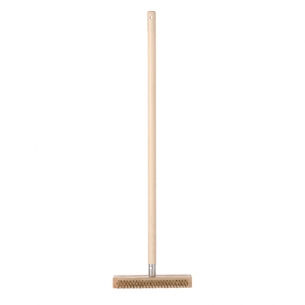
A professional pizza oven in service is at 350-450°C. The baking chamber radiates an intense heat that makes any direct access dangerous without a suitable tool. The 93 cm handle of this brush lets you reach the whole deck — including the back of an 80 cm deep oven — without the pizzaiolo's hand coming closer than 60 cm to the oven mouth. It is the safe distance that avoids radiant burns during a quick clean between two pizzas.
The double face is the other fundamental asset. The first side is a stiff-bristle brush (or metal fibres) that sweeps burnt flour, ash and light crumbs in a quick movement. The second side is a scraper or harder face that attacks sticky residue — solidified melted cheese, overflowing topping, carbonised crust. The two faces work in sequence on a soiled deck: first sweep, then scrape the hard spots.
Golden rule: clean hot rather than cold. At 350-400°C, the residues are dry and friable — they clear in a few brush passes. Cold, the grease and cheese solidify and stick to the deck, making cleaning much more laborious. Wood ovens need cleaning between every batch; gas and electric decks at the start of service and mid-service in case of high cadence.
Specifications
| Total length | 930 mm |
|---|
| Brush head width | 260 mm |
|---|
| Weight | 2 kg |
|---|
| Faces | Double (rigid brush + scraper face) |
|---|
| Compatibility | Electric, gas, wood deck ovens |
|---|
What pizzaiolos ask
- How often should the deck of a pizza oven be cleaned?
- In active service, the rule is to clean between each batch (or at least every 3-4 pizzas) to keep a clean deck. A quick 20-30 second clean between each pizza is better than a long clean every 10 pizzas — the deck stays cleaner, baking is more even and residue has no time to carbonise deeply.
- Can this brush be used on a stainless or refractory stone deck?
- Yes. The brush is compatible with all deck types: refractory stone (the most common in professional pizza ovens), cordierite, chamotte, and stainless steel for multifunction oven decks. On a delicate stone deck (slate, fine natural stone), avoid pressing too hard with the scraper face so as not to scratch the surface.
- Should the brush be dampened before hot cleaning?
- No, as a rule. On a very hot deck (450°C for a Neapolitan wood oven), the brush moisture vaporises instantly and can project steam toward the pizzaiolo. The professional technique is dry cleaning on a hot deck. Some use a slightly damp brush for 300-350°C ovens (electric or gas deck) to trap burnt flour and stop it lifting into the chamber — but this stays optional.
Delivery — Double-sided pizza oven brush, 930 mm, 2 kg, 260 mm head. Delivery on request — write via the contact form for lead times.
MFF Guarantee & After-Sales: 1-year manufacturer guarantee, extended guarantee available. MFF technical support. Delivery 48–72h mainland France.