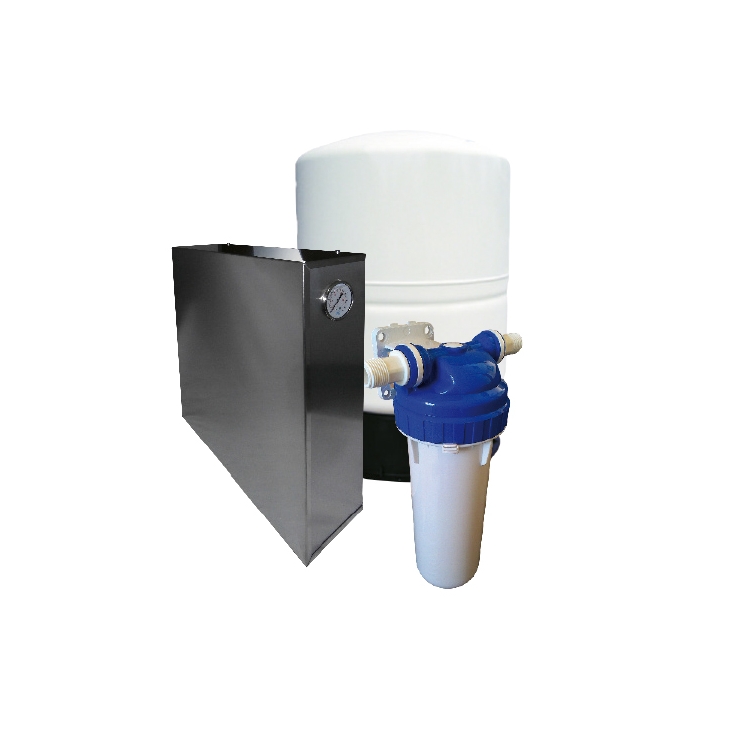
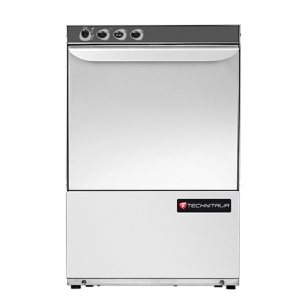
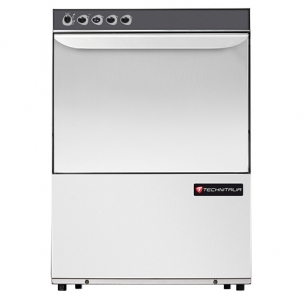
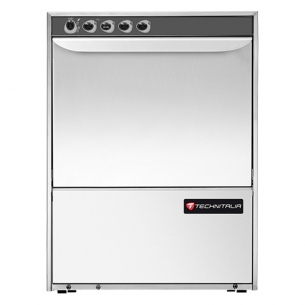
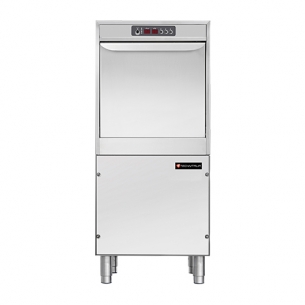
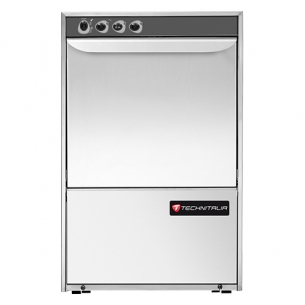
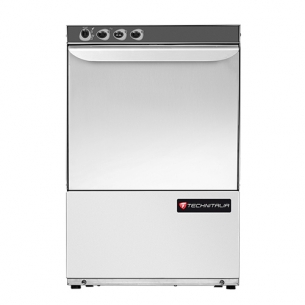
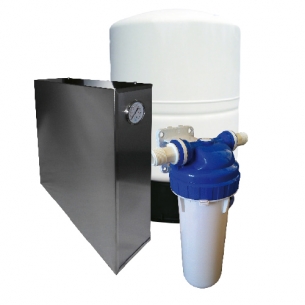
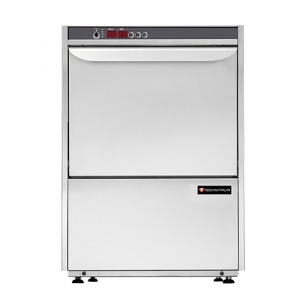
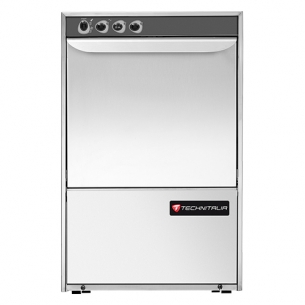
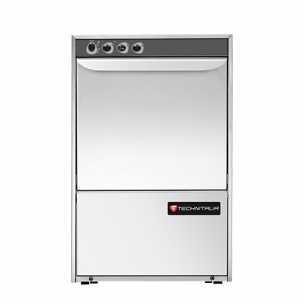
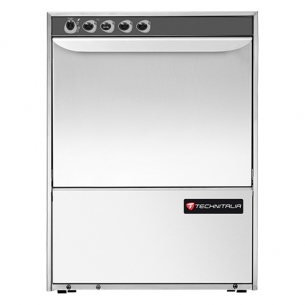
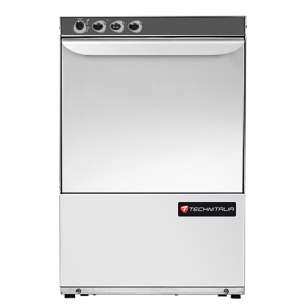
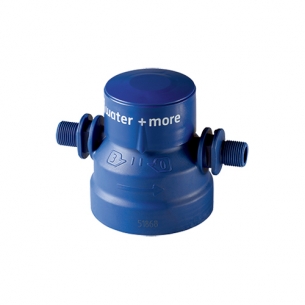
The MFF reverse osmosis kit with integrated tank for professional glasswashers is the highest-performance water treatment solution in the range. Reverse osmosis filtration produces near-zero-mineral water (TDS typically below 20 ppm), ensuring perfectly sparkling glassware with no mineral residue — even after air-drying without wiping. At €4490 excl. VAT, it is the specification for premium bar operations, wine bars and cocktail venues where glassware presentation is a service differentiator.
Why water quality matters for professional washing equipment
Commercial glasswashers, dishwashers and combi-ovens share a common vulnerability: they use water as the primary cleaning and rinsing medium, and they heat that water repeatedly to high temperatures. In hard-water zones — where water hardness exceeds 15–20°f (French degrees), covering the majority of northern and eastern France, the Paris basin, Lyon and the Rhône corridor, and much of the south-east — dissolved calcium and magnesium carbonate precipitates onto heating elements, spray nozzles, and tank surfaces every time the water is heated. This process is unavoidable without treatment, and its consequences are predictable: reduced thermal efficiency, blocked spray nozzles, element failure, and visible limescale residue on glassware and crockery.
The economic case for water treatment is straightforward: the annual cost of water treatment consumables (salt for softeners, replacement cartridges, periodic filter maintenance) is consistently lower than the cost of a single heating element replacement call-out, which typically costs €200–500 in parts and labour for a glasswasher and €400–900 for a dishwasher or combi-oven. In a hard-water zone, an untreated machine will require its first element service within 18–36 months; a treated machine in the same zone will typically run for 5–8 years before significant component wear becomes apparent.
Comparing treatment options: softener, reverse osmosis, and filtration cartridges
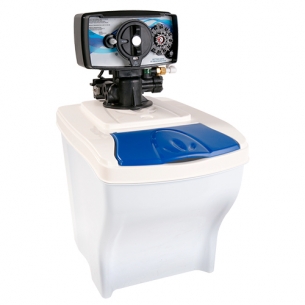
Ion-exchange softeners (manual or automatic) remove calcium and magnesium ions from the water supply by exchanging them with sodium ions on a resin bed. They are the most common water treatment solution for glasswashers and dishwashers: highly effective against limescale, low maintenance (periodic resin regeneration with coarse salt), and compatible with all commercial washing equipment. Manual softeners require periodic manual regeneration; automatic softeners (like the Pro 3W model) programme and initiate regeneration independently. Softened water produces visibly better wash results — streak-free glassware and spot-free crockery — in hard-water zones.
Reverse osmosis (RO) systems produce water of near-zero mineral content by forcing mains water through a semi-permeable membrane that rejects dissolved solids. The result is ultra-pure water (TDS typically below 20 ppm) that produces sparkling glassware with no trace of mineral residue — even after air-drying, without wiping. RO is the highest-performance water treatment option and is the preferred specification for high-end bars, wine bars, and cocktail venues where glassware presentation is a service differentiator. An integrated reservoir maintains water supply during peak demand; the membrane requires periodic replacement (typically every 2–3 years depending on water quality).
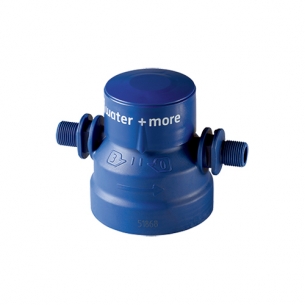
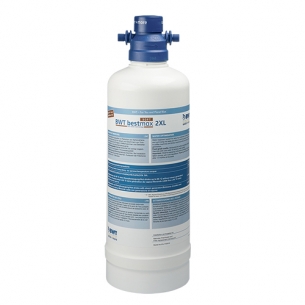
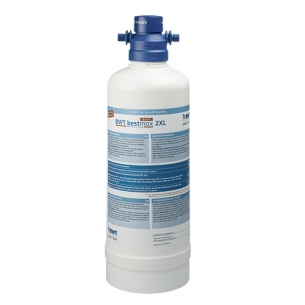
Filtration cartridge systems (such as the BWT Bestmax range) provide multi-parameter water treatment: they reduce hardness, chlorine, chloramines, sediment, and taste/odour compounds in a single cartridge. Unlike a softener, a cartridge system does not require salt regeneration — it is replaced as a unit when the cartridge capacity is exhausted (typically every 6–12 months depending on water hardness and volume). Cartridge systems are particularly well suited to combi-ovens and ice machines, where the different water chemistry requirements make a simple softener a suboptimal solution.
Hard water risk by region: where treatment is essential
French water hardness data (published by SISPEA) shows consistent regional patterns. Hard water zones (above 20°f, where treatment is effectively mandatory for equipment longevity): Paris and Île-de-France (25–35°f), Hauts-de-France (20–30°f), Grand Est (15–35°f), Auvergne-Rhône-Alpes (variable, 10–30°f), Bourgogne-Franche-Comté, Normandy (eastern half). Moderate zones (12–20°f, where treatment extends equipment life significantly): much of the Loire Valley, Pays de la Loire, Nouvelle-Aquitaine east. Soft water zones (below 12°f, where treatment is optional): Brittany, western Normandy, south-western France (Landes, parts of the Pyrénées-Atlantiques and Gironde).
If you are uncertain of your local water hardness, your water provider (Veolia, Suez, or local régie) is required to publish hardness data; it is also available from the SISPEA public database at eaufrance.fr. A quick check before specifying your water treatment system can prevent years of avoidable maintenance costs.
Installation: simple connections, quick setup
All MFF water treatment systems connect to the mains cold water supply before the washing equipment inlet — the treatment unit sits inline on the 3/4" supply pipe, with a standard push-fit or compression fitting on both the inlet and outlet sides. Installation requires no specialist tools and can typically be completed in 30–60 minutes by a competent plumber or the establishment's maintenance team.
Manual softeners require initial resin charge (supplied) and the first salt regeneration at commissioning. Automatic softeners connect to a power supply (230 V, low-draw) and programme the regeneration cycle from the control panel. RO systems require the membrane to be flushed for 24 hours before first use; the connected reservoir fills during this period. Cartridge systems are operational immediately on installation — open the valve, confirm flow, begin use.
Maintenance and replacement cycles
Manual softener resin: regenerate when the salt indicator or water hardness test indicates depletion — typically every 4–8 weeks in a hard-water zone at normal glasswasher throughput. Automatic softeners self-programme the regeneration schedule based on programmed water hardness and measured volume. Salt consumption is approximately 0.5–1 kg per regeneration cycle.
RO membranes: replace every 2–3 years, or when output TDS rises above the target threshold (measurable with a pocket TDS meter). Pre-filters (sediment and carbon): replace annually. Cartridge systems: replace the cartridge when the capacity indicator shows depletion — typically 6–12 months at normal use. Replacement cartridges are available from MFF.
MFF delivers throughout metropolitan France within 5–7 working days. Contact us for water hardness assessment, treatment system selection advice, or technical support on existing installations.