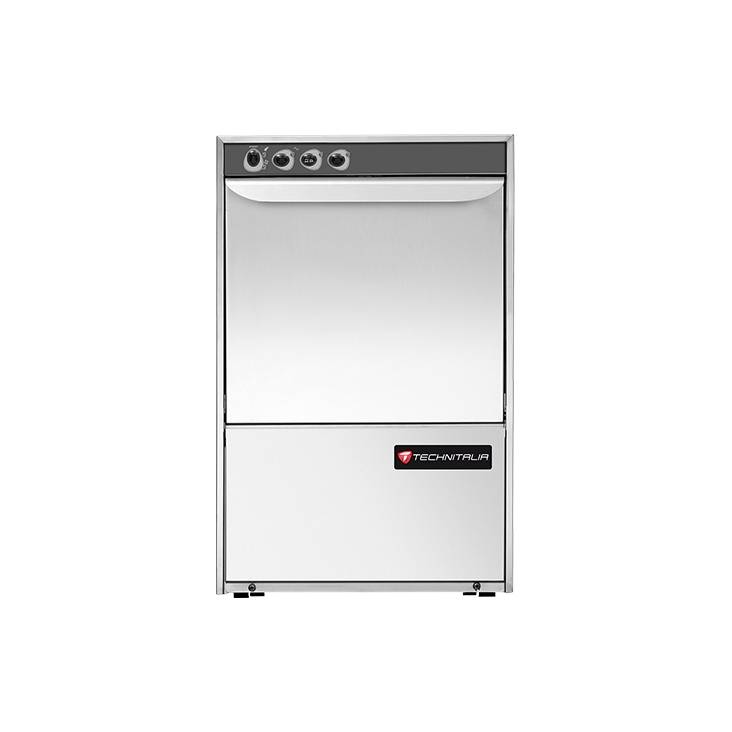
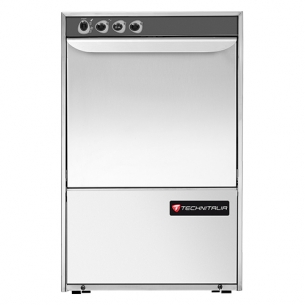
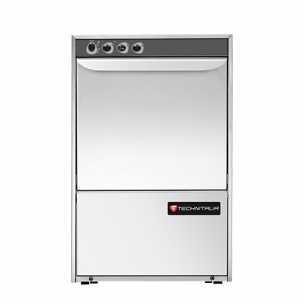
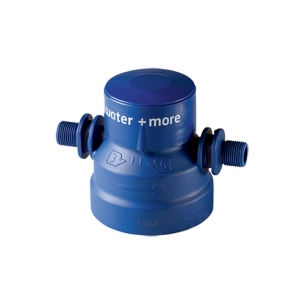
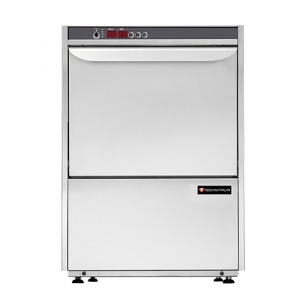
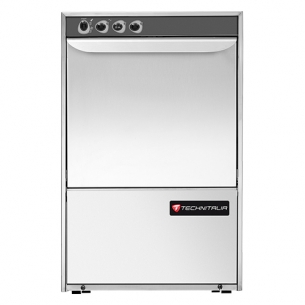
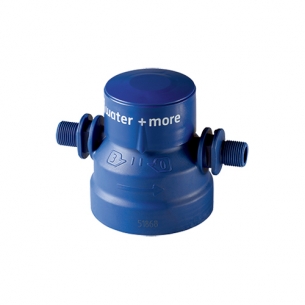
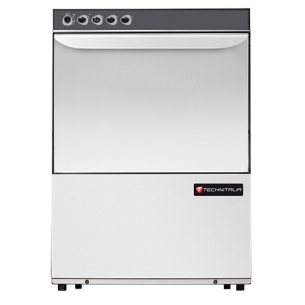
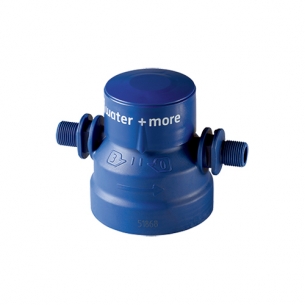
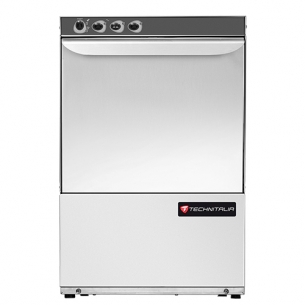
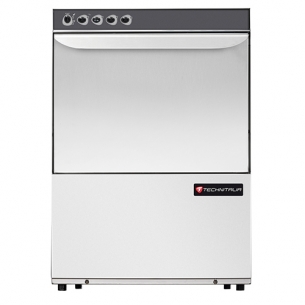
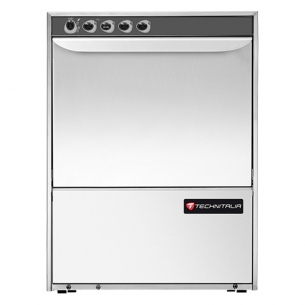
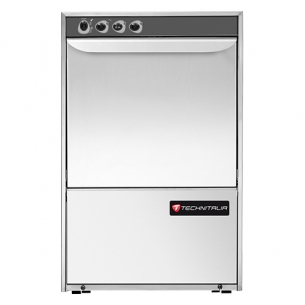
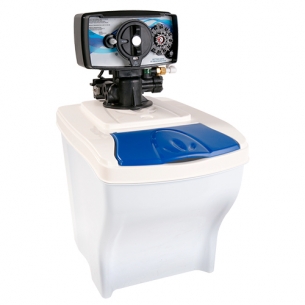
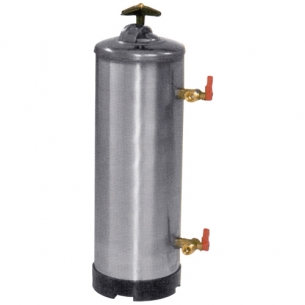
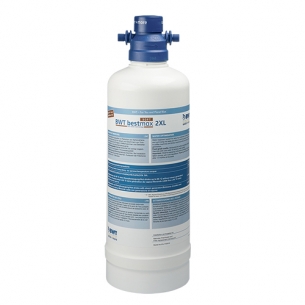
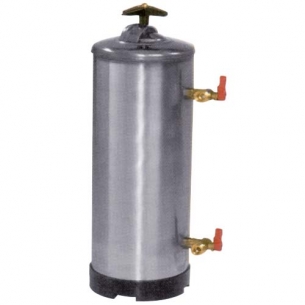
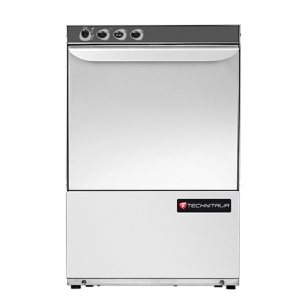
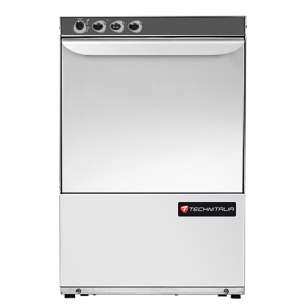
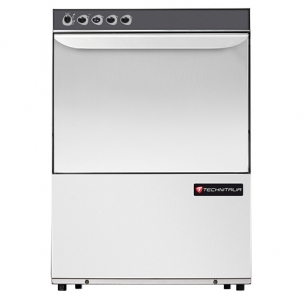
The MFF 400 mm double-skin professional glasswasher, 3.2 kW (460×550×720 mm) with integrated water softener, drain pump is a complete, HACCP-compliant bar washing station. The integrated water softener protects the heating element against limescale in hard-water zones and ensures streak-free glassware with every cycle. The integrated drain pump eliminates the need for a gravity drain — essential for non-standard bar counter installations. Priced at €2900 excl. VAT, it delivers professional-grade wash results at a competitive entry-level price point for the CHR sector.
Single-skin vs double-skin glasswashers — which construction to choose
Single-skin glasswashers are the standard entry point for bars, cafés and hotel breakfast rooms handling moderate glass volumes. The outer panels are uninsulated: the machine is compact and affordable, and performs identically to a double-skin model in terms of wash quality and hygiene. The tradeoff is operating noise and heat emission — at peak service, a single-skin machine will radiate noticeable warmth into the immediate area and run audibly.
Double-skin construction adds a full insulating layer between the inner tank and outer casing. In a busy brasserie, cocktail bar or hotel lobby bar, this translates directly into a quieter service environment and a cooler workspace for bar staff. It also reduces energy waste: the insulated tank loses less heat between cycles, so the machine reaches wash temperature faster at the start of service and maintains it more efficiently throughout a long shift.
The 400 mm basket format offers roughly 30% more capacity per cycle than the 350 mm format. For establishments serving 100 or more covers per service — or venues with specialist glassware (large wine glasses, tall cocktail glasses) that need more internal clearance — the 400 mm model is the practical choice. The 350 mm format is the right specification for lower-volume operations where the smaller footprint and lower price point are the deciding factors.
HACCP compliance at the bar and café washing station
Professional glasswashers are validated HACCP washing systems. The wash cycle reaches 60–65 °C with detergent dosing, and the rinse phase achieves 82–85 °C — the temperature threshold at which thermal disinfection of glassware is confirmed under EU Regulation (EC) No. 852/2004 and French food hygiene legislation. This two-stage thermal process, combined with the chemical action of commercial glasswasher detergent and rinse aid, reliably inactivates pathogens that hand-washing cannot guarantee to eliminate.
For bar operators, HACCP compliance at the glasswasher has two practical consequences: first, a correctly programmed machine with documented chemical dosing satisfies the requirements of a DGAL food hygiene inspection; second, a consistent, validated wash result protects against guest complaints relating to residue, cloudiness or odour on glassware — which are almost always caused by inadequate chemical dosing or limescale build-up on poorly maintained equipment.
Water softener: when is it necessary?
In hard-water zones — defined as water hardness above 20°f (French degrees of hardness), which covers the majority of northern and eastern France, the Paris basin, and most of the Rhône-Alpes corridor — an integrated water softener is not optional, it is a maintenance necessity. Limescale deposits on the heating element reduce its thermal efficiency: a 2 mm deposit adds roughly 10% to energy consumption and accelerates element failure. Over a 3–4 year period, the cost of element replacements in an unsoftened machine in a hard-water zone consistently exceeds the cost of the softener itself.
Beyond the equipment protection argument, softened water produces visibly better wash results: the white film that forms on glasses in hard-water zones (calcium carbonate residue from the rinse water) disappears entirely with a functioning softener. For establishments where glassware presentation is part of the service experience — wine bars, hotel restaurants, cocktail bars — this alone justifies the investment.
In soft-water zones (Brittany, south-western France, parts of Normandy — water hardness typically below 12°f), an integrated softener provides marginal additional benefit. The without-softener configuration is the correct specification in these zones, or where a whole-system softener is already fitted to the mains water supply.
Drain pump: plumbing flexibility
The standard drain outlet uses gravity: wastewater flows out of the machine and down to a floor trap or standpipe. This works without issue in most bar counter installations. The drain pump option is required when the drain outlet of the machine is at the same level as — or above — the nearest drain point: a common situation in bar counters built over raised flooring, mobile catering units, and counter installations where the waste plumbing runs horizontally for more than 1.5 metres before reaching a drop.
Specifying a drain pump eliminates the need to excavate or re-route plumbing during a counter fit-out, which typically costs significantly more than the pump option itself. If you are planning a new bar counter installation and are uncertain whether gravity drainage will be practical, select the drain pump configuration as a default.
Installation and workspace planning
A glasswasher requires a cold-water inlet (3/4" BSP, minimum 2 bar dynamic pressure), a drain connection (32 mm or 40 mm waste outlet, or pump-assisted if required), and a dedicated electrical circuit. Most models in the 350–400 mm range operate on single-phase 230 V supply; check the technical specification for the exact amperage requirement before specifying the circuit breaker rating.
Footprint dimensions for 350 mm models are typically 400×490 mm; 400 mm models run to approximately 460×550 mm. Both formats fit under a standard 850 mm bar counter with 150–200 mm clearance for ventilation above the machine lid. Avoid positioning the machine directly beneath refrigeration equipment or immediately adjacent to heat-sensitive surfaces — the lid releases steam during unloading, and in a confined space this can cause moisture damage to adjacent cabinetry over time.
Chemical dosing (detergent and rinse aid) is via peristaltic pump connections on the rear of the machine. Most commercial glasswasher chemicals are available from regional catering supply distributors; MFF can recommend compatible products on request.
Who is this glasswasher for?
- Bars, cafés and brasseries: The primary use case. A professional glasswasher reduces glass-turn time from 15–20 minutes (hand wash + dry) to 2–3 minutes per basket, enabling a bar to operate with a smaller glassware inventory and eliminating the hand-washing bottleneck at peak service.
- Hotel breakfast rooms and lobbies: Compact 350 mm models fit into service areas where a full kitchen is not available. HACCP compliance is maintained without requiring a dedicated plonge operator.
- Event caterers and pop-up venues: Mobile bar operations benefit from the drain pump option, which eliminates dependency on gravity plumbing at temporary venues.
- Wine bars and cocktail bars: The 400 mm format accommodates large wine glasses (Bordeaux, Burgundy) and tall cocktail glasses that do not fit in a 350 mm basket.
MFF glasswasher range at a glance
| Format | Skin | Softener | Drain pump | Best for |
|---|
| 350 mm SP | Single | Optional | Optional | Low-medium volume bar, soft-water zone |
| 350 mm DP | Double | Optional | Optional | Open-plan bar, quieter operation |
| 400 mm SP | Single | Optional | Optional | High-capacity, brasserie, 100+ covers |
| 400 mm DP | Double | Optional | Optional | Premium bar, large glassware, low noise |
MFF delivers throughout metropolitan France within 5–7 working days. Contact us for site-specific installation advice, chemical dosing setup, or to arrange a demonstration.